Article
Is Cash Dead?
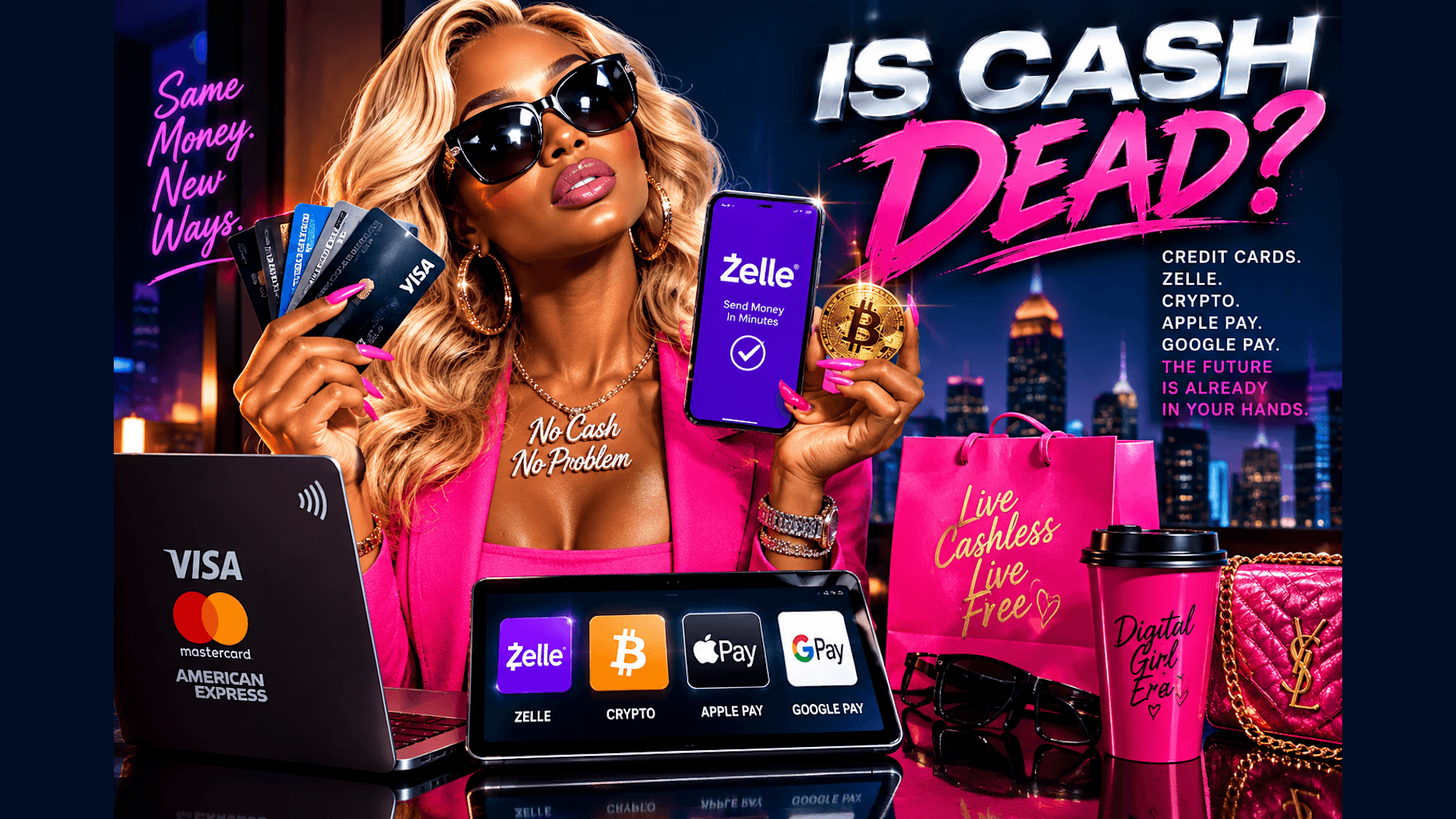
The Crime of Paper Money
At the institutional level—corporations, utilities, banks, and government bureaus—physical currency has been reclassified from standard tender to a logistical nuisance.
Try paying your phone bill with cash today. You will likely face a processing fee, a forced kiosk, or a customer service representative pointing you toward a QR code. Digital transactions are frictionless by design; handling physical cash now incurs a penalty.
This friction is intentional. Cash is expensive for power. It requires armored trucks, vaults, guards, tellers, and audits. Worse for corporations, cash is silent—it leaves no digital exhaust. A swipe or tap, however, generates a treasure trove of data to track your habits, feed algorithmic marketing, and lock you into recurring loops. Convenience isn't a feature anymore; it’s a behavioral trap. If you insist on staying offline, unbanked, or private, the system charges you a micro-penalty for every paper bill you hold.
The Street Economy Disarmed
This isn't just happening in corporate boardrooms or high-end suburbs. The block went digital first.
The vernacular of informal trade flipped almost overnight. "Pay me later" became "Cash App me," "Zelle me," or "Hit my Apple Pay." The street economy has always been an early-adoption lab for financial tech. If a tool moves money instantly without the lethal risk of carrying a thick stack of bills in your pocket, the street adopts it immediately.
Today, a barber cuts hair, a day worker hustles, and a corner shop operates without a single bill changing hands. But this digital speed run comes at a steep price. Every transaction now passes through a corporate middleman with the power to freeze accounts, demand identity verification, harvest data, or flag a payment on a whim. Cash used to offer absolute autonomy; digital wallets offer access conditionally.
The New Financial Caste System
LayerForm of MoneyCultural & Economic FunctionTier 1: The StandardCards & Auto-PayThe default highway for formal commerce, credit building, and institutional subscription models.Tier 2: The VelocityMobile Wallets & Peer-to-PeerInstant phone-to-phone ecosystems (Cash App, Zelle, Venmo) replacing hand-to-hand liquidity.Tier 3: The SpeculationCrypto AssetsHigh cultural noise and ideological appeal; heavily traded, but rarely spent on everyday survival.Tier 4: The OutcastPhysical CashLegal tender demoted to an emergency backup, a privacy tool, or a weaponized inconvenience.
The Ghost in the Machine
Cash survives today for the same reason it threatens modern financial architectures: it resists control.
Cash works when the power grid collapses. It doesn't charge a small business a 3.5% merchant fee. It doesn't track your location, report your habits, or freeze your assets during an identity check. For the unbanked and marginalized, paper money isn't nostalgia—it is a survival strategy against financial exclusion.
Meanwhile, the next generation is being conditioned to forget cash entirely. For a child, money isn't paper tucked into a birthday card; it’s a digital balance of V-Bucks, Robux, or Twitch bits. The pipeline is fully automated:
$$\text{Parent’s Card} \longrightarrow \text{Platform Balance} \longrightarrow \text{Virtual In-Game Asset}$$
When currency becomes purely numerical pixels, the tactile weight of spending vanishes. A kid understands the immediate status of a $20 digital character skin far better than the physical purchasing power of a paper $20 bill.
Demoted, Not Dead
Cash remains legal. It remains the ultimate refuge when systems fail, networks freeze, or privacy is paramount. But culturally, it has been stripped of its crown.
The battle for the future of money isn't about whether paper bills exist—it's about who gets punished for relying on them. In an economy that moves at the speed of a push notification, cash isn't just dying. The people who rely on it are being rendered invisible.
Related articles


Thanks for reading.
More articles