Article
Data Centers in Black, Mexican, and Native Indian Communities: Billions in Infrastructure, Generations Left to Bear the Cost
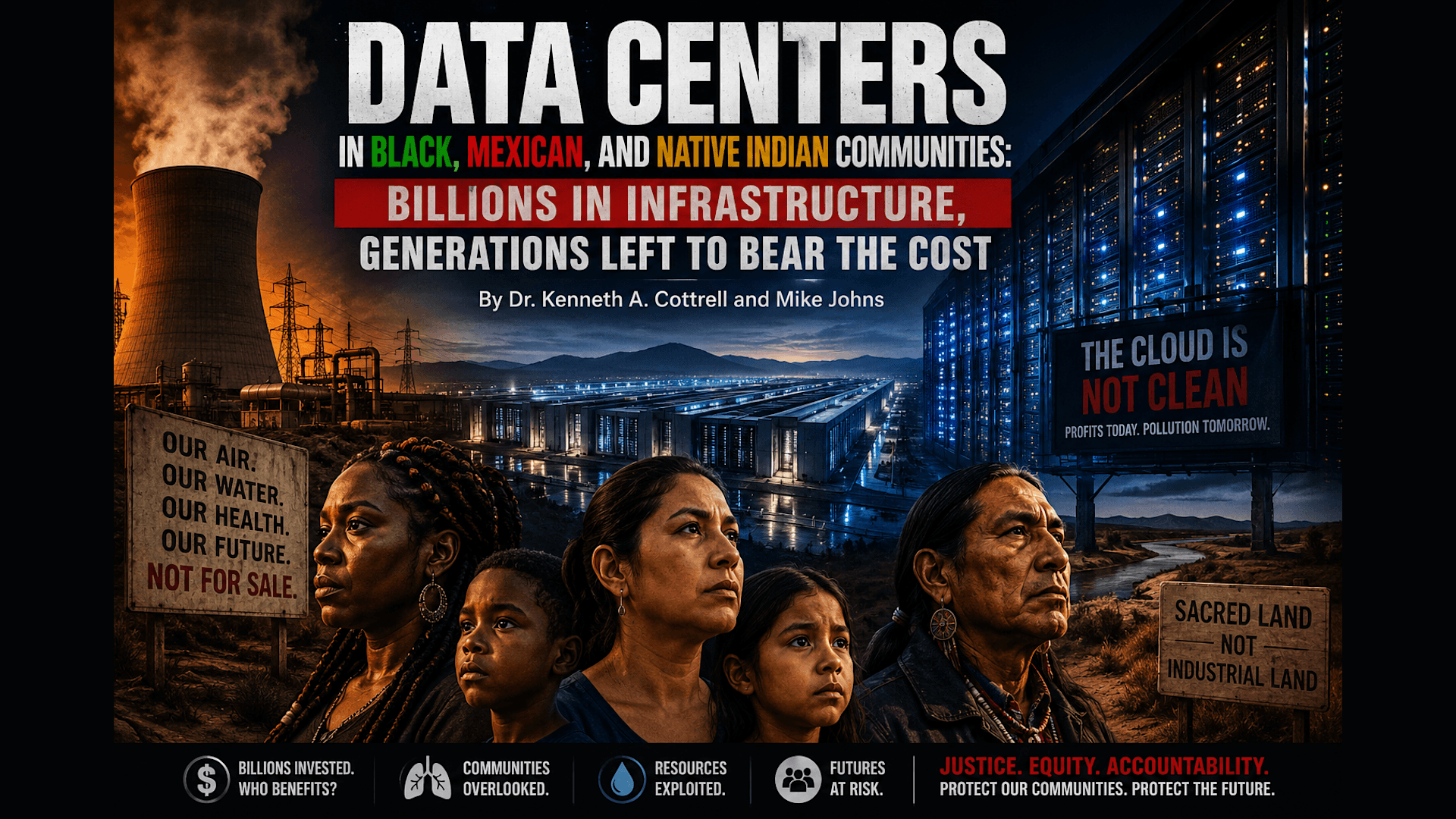
However, primary documentation, investigative reporting, and environmental justice data tell a drastically different story. Far from delivering long-term wealth, the rapid sprawl of data infrastructure creates localized "sacrifice zones"—siphoning off critical water, straining power grids, and polluting surrounding neighborhoods while offering minimal local economic return.
The Reality Behind Big Tech's Promises
While Big Tech executives highlight grand investment figures, long-term operations at these facilities require surprisingly few permanent workers. The jobs promised during ribbon-cutting ceremonies rarely materialize for local residents, leaving communities to shoulder the steep infrastructure costs.
Impact AreaCorporate PromiseReality for Black, Mexican & Native CommunitiesLocal Economy
Sustainable job growth and regional prosperity.
Low-yield permanent employment ("No Jobs Promised"), broken commitments, and digital redlining.
Grid & Energy
Clean technology integration and modernization.
Soaring household electricity bills, grid instability, and unpermitted gas/diesel backup generators.
Water ResourcesSustainable cooling and environmental stewardship.
Massive water depletion in drought-stricken regions, threat to drinking water, and strain on agriculture.
Community Voice
Collaborative development and civic partnership.
Fast-tracked rezoning, bypass of environmental reviews, and loss of local control.
Expanding the Environmental Justice Frontier
The impacts of hyper-scale data center development span across Black urban centers, Mexican agricultural basins, and sovereign Native lands:
Black Neighborhoods under Siege: Facilities across the American South—such as xAI’s "Colossus" in Boxtown (Memphis), TN, Project Marvel in Bessemer, AL, and expanding complexes in South Fulton, DeKalb, and Newton County, GA—are forcing Black residents to battle unpermitted gas turbines, elevated air pollution, and rising utility rates.
Native Land & "Data Colonialism": Developers are increasingly targeting sovereign Tribal lands—from the Muscogee (Creek) Nation in Oklahoma to the Pyramid Lake Paiute Reservation in Nevada and the Tonawanda Seneca territory in New York. Organizers warn this represents a modern iteration of resource exploitation, where tech giants consume millions of gallons of water daily and leverage tribal sovereignty to bypass standard environmental regulations.
Mexican & Latino Borderlands Strain: In water-scarce regions like Colón, Querétaro (Mexico) and California's Imperial County, massive data complexes threaten fragile aquifers. In Imperial County, developers attempted to build a million-square-foot AI data warehouse without a California Environmental Quality Act (CEQA) environmental review, drawing fierce opposition from majority-Latino residents who already face severe environmental and economic stress.
Why This Matters
This issue goes far beyond technology; it is an urgent matter of public health, civil rights, and climate justice. When data centers consume double the electricity of an entire county or pull millions of gallons of water from depleted aquifers during extreme droughts, surrounding households pay the price through higher utility bills, degraded air quality, and dried-up natural resources. Allowing tech corporations to bypass environmental reviews and community oversight sets a dangerous precedent, treating low-income communities of color as disposable backdrops for corporate profit.
What to Do This Election Season
Infrastructure decisions are fundamentally political decisions. Local and state elections directly determine who controls zoning boards, utility commissions, and environmental enforcement. During this election cycle, voters must hold candidates accountable by demanding clear commitments:
Demand Binding Community Benefit Agreements (CBAs): Require legally enforceable hiring quotas, local tax guarantees, and direct community investments before any project is approved.
Enforce Full Environmental Reviews: Reject attempts by developers or local officials to bypass standard environmental impact studies (such as CEQA) or issue ministerial approvals behind closed doors.
Protect Ratepayers & Water Supplies: Vote for public utility commissioners and local leaders who pledge to protect residential power rates and prioritize agricultural and drinking water over industrial cooling.
Support Local Moratoriums: Back municipal and county moratoriums on new data center construction until comprehensive environmental, cumulative-impact, and health assessments are completed.
Call to Action
Our communities are not disposable, and our natural resources are not infinite. We cannot allow big tech corporations to power the future by sacrificing the health, water, and economic stability of Black, Mexican, and Native Indian neighborhoods.
Take action today: Organize with local grassroots groups, attend county planning commission hearings, interrogate candidates on their data center policies, and vote to defend your community's air, water, and power. Mobilize your neighbors using the hashtag #OurCommunitiesAreNotSacrificeZones and demand transparency, environmental justice, and local control now.
Reference Sources:
[Dr. Kenneth Cottrell Opinion Piece on Data Centers and Environmental Justice](cite: 1)
Context News: Thirsty Data Centres Spring Up in Water-Poor Mexican Town
KPBS: Plan to Build Massive Data Center in Imperial County Without Environmental Review
Kapor Foundation: Data Centers, Environmental Health, and Equity
Native Communities Fight AI Data Centers on Indigenous Land
This video provides direct context on how Indigenous activists are fighting back against AI data center expansion and resource exploitation on Native lands.
Related articles



Thanks for reading.
More articles