Article
Legal Fakes Going Viral: How “Hotel Lobby” Became an AI Identity Business
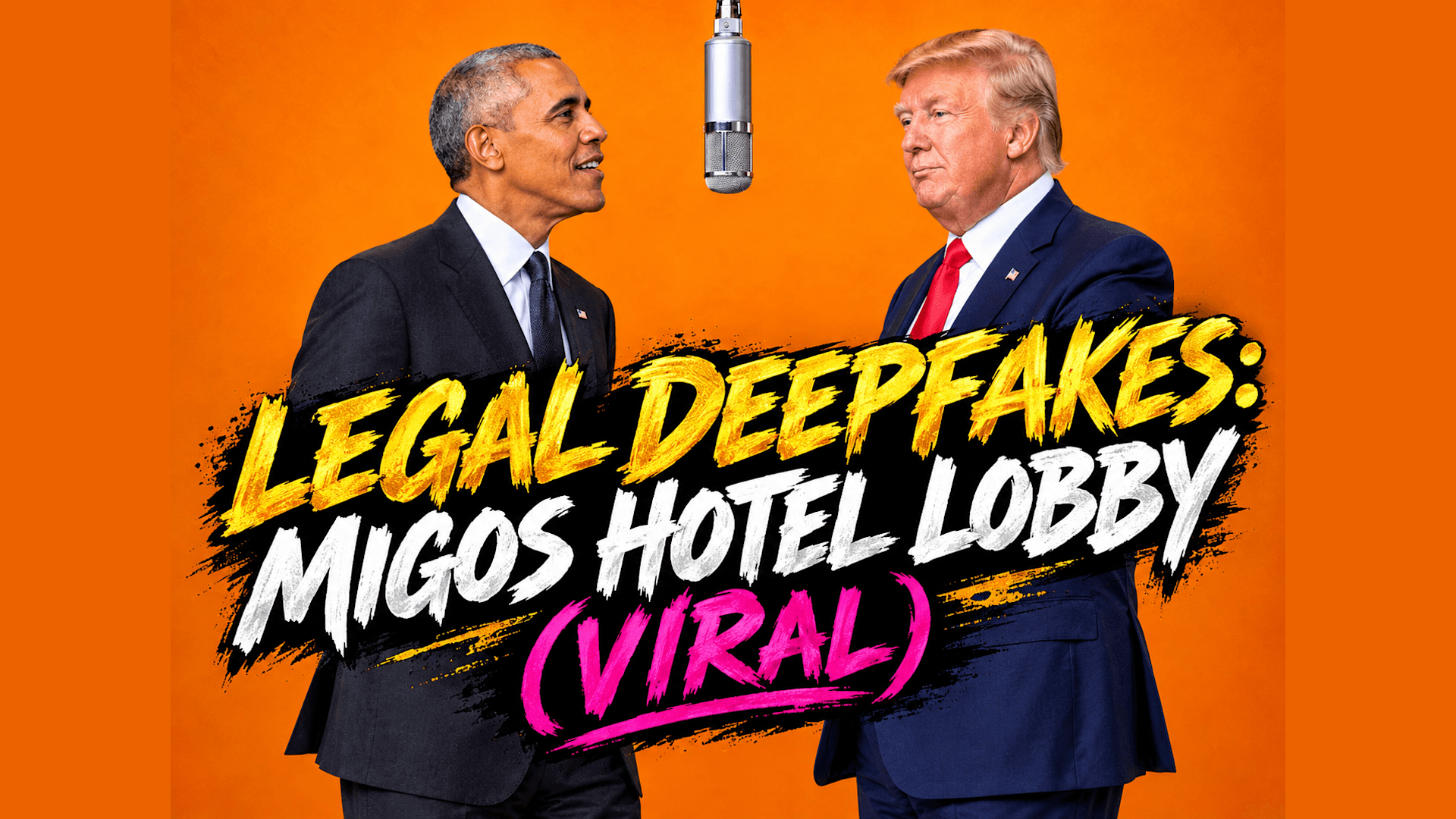
The Anatomy of a Viral Trend
What looks like another disposable internet trend sits at the intersection of music, artificial intelligence, identity rights, and a rapidly expanding market for synthetic entertainment.
As captured in viral clips across social platforms (like this TikTok example featuring the trend), thousands of creators are leveraging generative tools to swap identities onto iconic performances:
The Source Material: Quavo and Takeoff’s 2022 “Hotel Lobby” performance on A COLORS SHOW (as Unc & Phew). Its back-and-forth delivery, recognizable gestures, and stripped-down setting supply the underlying energy.
The Tools: Apps like Starrd, Summrs, and CapCut replace the artists' faces while preserving the original audio, movements, and lip-syncing.
The Cast: Videos feature Barack and Michelle Obama, Walter White and Jesse Pinkman, soccer stars Erling Haaland and Jude Bellingham, and household pets.
“The AI does not need to write a better song or stage a better performance. It needs to place a surprising identity inside one that already works.”
Cultural Fatigue vs. The “No AI” Countermove
The trend offers an extraordinarily low barrier to entry, but unbridled replication quickly brings fatigue, exploitation, and algorithmic noise.
Participation vs. Contribution: April Woolard, founder and CEO of Next Wave Innovation, notes that while fans briefly felt connected to the performance, unverified spam rapidly caused "AI fatigue."
The Real-Life Response: Quavo and Victoria Monét recreated the scene in person, captioning it “No AI.” In a feed filled with synthetic face-swaps, real human presence became the ultimate counter-statement.
The Business & Legal Reality
DimensionKey TakeawayMonetization GapApp platforms collect upfront fees (~$5 per clip on Starrd), while creators and original rights holders see zero direct ad split on short face-swap clips.Right of PublicityFace-swapping onto existing footage isn't automatically legal—context matters. It routinely violates publicity rights and suggests false endorsement.Layered CopyrightClearing an image does not grant rights to the underlying audio recording, composition, or visual footage.
Why Popology Networks is the Solution for Media Literacy & Creator Ownership
The viral "Hotel Lobby" craze highlights a fundamental breakdown in legacy digital ecosystems: platforms incentivize rapid engagement while stripping attribution, context, and financial credit from the original creators.
This is where Popology Networks presents a structural breakthrough for media literacy, creator governance, and verified digital attention.
1. Verifiable Public Trust Ledger for Media Literacy
Media literacy in the AI era requires more than just guessing "Is this deepfake real?" It requires transparent origin verification. Popology operates a Public Trust Ledger that attaches immutable metadata, digital rights management (DRM), and origin tracking to digital assets. Audiences, platforms, and educators can instantly trace where content originated and whether an identity was used with authorization.
2. Empowering Citizen Curation via POPcasts
Instead of third-party AI face-swapping apps siphoning off millions in untracked user fees, Popology introduces structured curation tools (POPsphere and POPcasts). Curators ("POPologists") build engagement around creator-approved media while ensuring both the original artist (e.g., Quavo, Takeoff's estate) and the curator share transparently in the generated value.
3. Transparent BrandSmart Contracts
Through automated BrandSmart contracts, brands sponsor creator-chosen, creator-governed content on a public ledger—without algorithmic manipulation or predatory ad-bidding. It transforms viral participation from unauthorized exploitation into an opt-in, DMCA-safe, brand-approved economic engine.
Key Takeaways for the Future of Media
Authorship Matters: Media literacy begins with understanding who created the original foundation versus who applied the filter.
Consent Over Exploitation: Fabricated appearances shouldn't strip human performers of their agency or livelihood.
Infrastructure Drives Ethics: Infrastructure like Popology Networks proves that we can embrace technological innovation without sacrificing cultural respect, legal protection, or creator compensation.
Related articles
Thanks for reading.
More articles