Article
Hollywood, Pay Attention: Humanoid Robots Are Becoming the World’s Next Sport
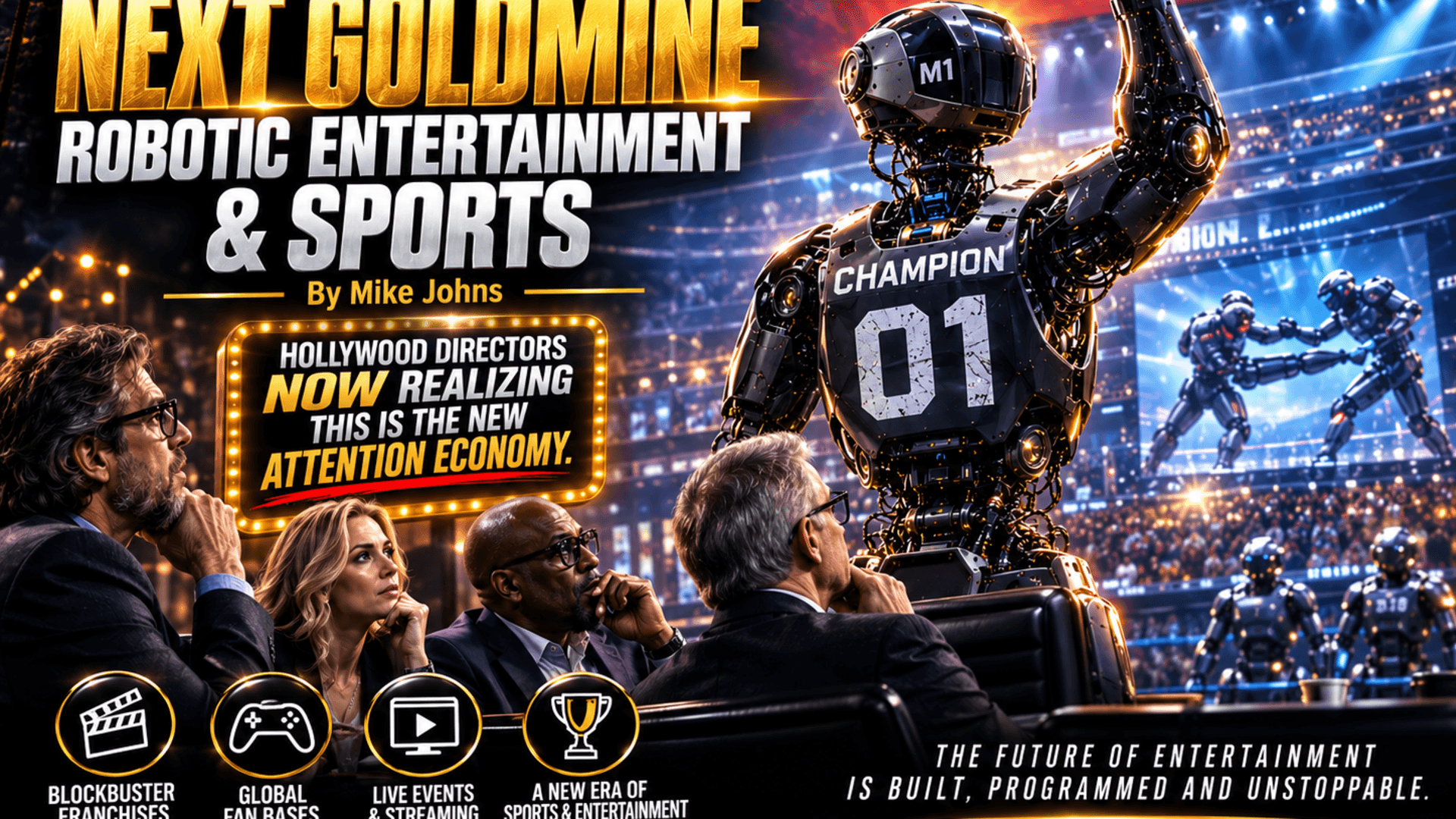
China’s World Humanoid Robot Games are not simply a technology exhibition. They are the early stages of a new sport—one in which robots compete and humans become the fans, commentators, owners, engineers, gamblers, creators, merch buyers, and media audience.
This weekend’s second World Humanoid Robot Games in Beijing brought together 2,056 robots and 666 teams, a sharp jump from the inaugural event’s roughly 500 robots and 280 teams just one year earlier. More than 1,300 individual matches are scheduled across five days, with events ranging from athletics, football, boxing, dance, and table tennis to industrial, hospitality, home-service, firefighting, and rescue challenges.
That is not a side show. That is the formation of a league.
The audience is already here
People do not watch robot competition because they are waiting for perfect machines. They watch because imperfection is drama.
A robot misses a kick. It trips. It crashes into an obstacle. The crowd laughs. Then the machine recovers, adapts, finishes the course, or comes back stronger in the next round. That is sport.
Humanoid robot games have the essential ingredients of attention:
Clear winners and losers.
Visual drama that needs little explanation.
Surprising failures and breakthroughs.
Teams, rivalries, flags, cities, schools, brands, and national pride.
Engineers and operators who become personalities.
Machines that improve in public, event by event.
Short clips built for TikTok, YouTube Shorts, Instagram Reels, and X.
Live events that can become appointment viewing.
The 2026 Games are being livestreamed on YouTube, while in-person tickets in Beijing reportedly start around 98 yuan—about $14.50. The fact that people can buy a ticket to watch robots compete is the signal. We are moving from robotics as a lab demonstration to robotics as spectator entertainment.
BattleBots already established that the public will watch machines battle. The franchise describes its community as “millions of fans” globally and continues to release full episodes and behind-the-scenes content through YouTube and other social platforms. Humanoid robot competition expands that formula: instead of two machines destroying one another in an enclosed arena, viewers can watch robots run, dance, fight, play sports, work jobs, fail, learn, and evolve.
BattleBots proved machine competition can attract an audience. Humanoid robotics could make it mainstream.
The next Netflix franchise
Hollywood should look at these games and see more than metal, motors, and AI models. It should see a new intellectual property universe.
Imagine a streaming series called Rise of the Robots:
A season begins with 16 teams: universities, startups, global brands, professional athletes, cities, and creators. Every episode follows a high-pressure challenge—a 100-meter sprint, a tennis return, a warehouse race, a rescue mission, a football match, or a head-to-head obstacle course.
Behind every robot is a human story:
The student team building its first humanoid with limited funding.
The former athlete coaching a robot team on performance and discipline.
The engineer whose robot keeps falling but refuses to quit.
The startup founder betting everything on one championship.
The city trying to become the next global robotics hub.
The operator learning that a robot is only as smart as the people who train, supervise, and improve it.
That is not a niche documentary. It is a new form of sports storytelling.
It could combine the access of Drive to Survive, the controlled chaos of BattleBots, the technical pressure of a startup competition, and the spectacle of the Olympics. It can live as a live broadcast, a Netflix docuseries, a YouTube highlight machine, a gaming franchise, a touring live event, and a creator-led social-media ecosystem.
The winners will earn trophies. The teams will earn fans. The league will earn attention.
And in the modern economy, attention becomes media rights, sponsorships, advertising, merchandise, ticket sales, licensing, gaming, education, and brand power.
Humans are the spectators—for now
The striking image is not simply robots playing sports. It is humans filling seats to watch them.
Humanoid sports reverse the traditional formula. In every other major league, human beings are the athletes and machines deliver the broadcast. In robot sports, machines become the athletes while humans provide the emotion, strategy, loyalty, commentary, and culture.
That distinction matters.
The real product is not the robot. The product is the relationship people build with a team, a city, a robot personality, a creator, or a story of technological progress.
Fans will ask questions that sound familiar:
Who has the fastest robot?
Which city has the best robotics team?
Who built the smartest machine?
Can the underdog team beat the well-funded corporate favorite?
Will the robot recover after a brutal fall?
Who owns the league?
Which brand sponsors the championship?
Can America beat China?
The emotional logic of sports does not disappear just because the athletes are machines. It becomes amplified by the unknown. Every match is also a glimpse into what AI can do next.
A new economy is being born
The humanoid robot games are not only a sport. They are a market map for a new economy.
IndustryWhat robot sports can createHollywood and streamingDocuseries, live broadcasts, competition shows, film rights, creator franchisesSportsNew leagues, team ownership, athlete partnerships, stadium events, sponsorshipsSocial mediaViral clips, livestreams, reaction content, fan communities, technical creatorsEducationAI literacy, STEM programs, school leagues, robotics camps, scholarship pathwaysWorkforce developmentTraining for robot operators, maintenance technicians, safety specialists, and AI supervisorsManufacturingDemand for motors, sensors, cameras, batteries, chips, actuators, and robot hardwareGamingDigital robot leagues, simulations, fan-controlled teams, esports crossoversCities and tourismChampionships, conventions, fan festivals, technology showcases, host-city brandingRetail and merchandiseJerseys, collectibles, robot skins, licensed products, team apparel
The robot that wins a race is not merely a machine. It represents a supply chain, an AI stack, a manufacturing base, a brand story, a workforce, and a media opportunity.
China’s event has expanded rapidly: from approximately 500 robots and 280 teams in 2025 to more than 2,000 robots and 666 teams in 2026. That speed should concern U.S. leaders, but it should also inspire American investors, studios, universities, leagues, and cities to move.
America has no national answer
The United States has the raw material to lead this category:
World-leading AI companies and cloud infrastructure.
Robotics startups and elite research universities.
Hollywood’s production and storytelling machinery.
The NFL, NBA, UFC, motorsports, esports, and global sports-marketing expertise.
YouTube, TikTok, Instagram, Netflix, Amazon, Apple, Disney, ESPN, and a massive creator economy.
Cities that know how to host destination events.
Community colleges, workforce organizations, and schools capable of preparing people for physical AI jobs.
But the U.S. has no major national humanoid robot league. No annual American Robot Games with major broadcast rights. No coordinated platform where engineers, athletes, students, investors, creators, brands, and workforce partners can compete in public.
That vacuum will not last forever. But the longer America waits, the more likely it becomes that the global rules, media rights, manufacturing relationships, fan loyalties, and cultural ownership of robot sports will be established elsewhere.
China is not waiting for a perfect robot. It is building the audience while the robots are still falling.
That may be the smartest move of all.
Hollywood: build it before someone else does
The future does not enter society through white papers. It enters through stories, entertainment, fandom, and culture.
Humanoid robot competitions can make AI tangible for ordinary people. They can show what machines are capable of, where they fail, why human oversight matters, and what new jobs are emerging. They can turn fear of automation into curiosity—and curiosity into participation.
Hollywood should not wait until humanoid robots are flawless. The flawed robots are the content.
The fall is content.
The comeback is content.
The rivalry is content.
The championship is content.
The human story behind the machine is content.
The question is no longer whether people will watch robots compete.
They already are.
The question is whether American media companies, sports leagues, technology leaders, and cities will recognize that a new sport is being born—before another country owns the audience, the league, the culture, and the future.
Related articles


Thanks for reading.
More articles