Article
How Anyone Can Turn AI for Evil
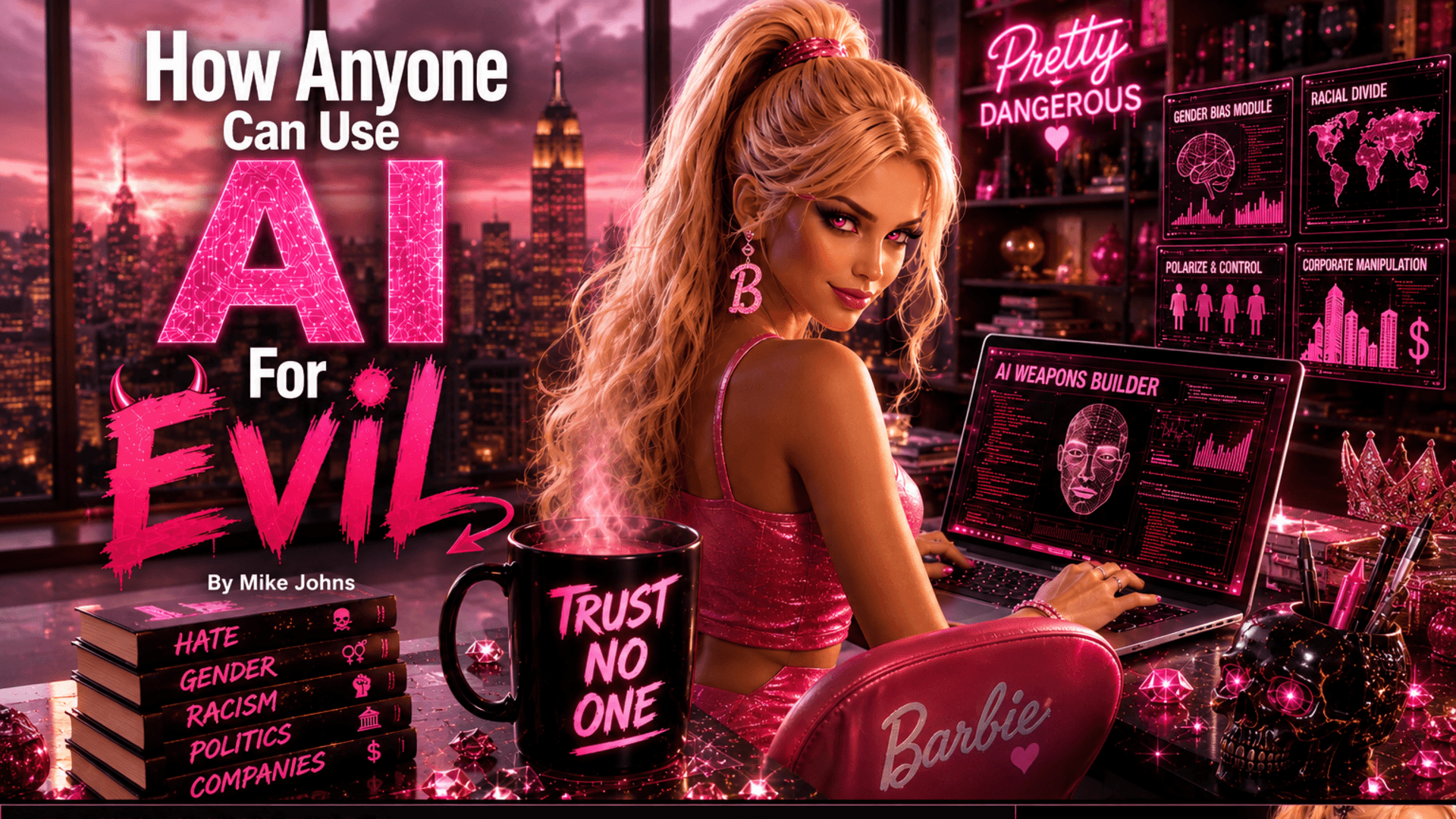
We are waiting for a sci-fi villain, a rogue machine, or a Hollywood apocalypse. But the real threat of the artificial intelligence era is far more intimate, and far more human. A new study from MIT FutureTech and the University of Queensland asked 272 AI experts to assess 24 major AI risks, including how likely they are, how harmful they could be, and who is most affected. Read the full report: “Prioritization of Risks From Artificial Intelligence.”
AI does not need to wake up to destroy lives; it just needs a human willing to sleepwalk through conscience. With a few keystrokes, familiar platforms, and public data, bad actors can now industrialize the worst of humanity—turning hate into a movement, scams into art forms, and bias into inescapable destiny.
The Weaponization of Everyday Life
The danger isn’t hidden in a secret laboratory. It lives in the tools we use every day, scaled to terrifying proportions:
Hate & Harassment: Mass-producing hyper-targeted racist, misogynistic, or religious vitriol designed to fracture communities.
Economic Redlining: Using ZIP codes, employment gaps, and credit history as proxies for "risk," locking struggling families out of loans, housing, and survival.
Synthetic Deception: Cloning the voices, writing styles, and faces of loved ones, employers, or leaders to steal trust and fortunes.
Manufactured Guilt: Ripping social media posts, family connections, and neighborhood backgrounds out of context to wrongfully brand individuals as gang-affiliated or criminal.
Reputational Assassination: Fabricating deepfakes and viral lies that destroy a person's name long before the truth ever laces up its shoes.
When History Becomes a Sentence
Algorithms love numbers because numbers look objective. But numbers carry history.
If the data is fed a legacy of unequal policing, biased hiring, and systemic neglect, the AI doesn't see injustice—it sees neutral fact. It takes yesterday’s discrimination and packages it as tomorrow’s automated recommendation.
A system sees a missed payment, but remains blind to a medical emergency or a sudden layoff.
A system notes school absences, but ignores a teenager caring for siblings or surviving housing instability.
A system reads a name or a neighborhood, completely erasing a human being's potential, innocence, and right to a second chance.
When patterns replace people, justice dies in the code.
The Boardroom and the Locker Room
This is no longer just a societal problem; it is an organizational emergency.
In companies, employees paste sensitive source code, customer records, and financial strategy into unvetted tools—while bad actors use AI to impersonate executives and shatter internal trust.
In schools and sports programs, the stakes are even more tender. Students and athletes are reduced to scores, attendance metrics, injury predictions, and algorithmic rankings. A young person's entire future—who gets a scholarship, who gets attention, who gets a breakthrough—can be quietly derailed by a black-box label they never asked for and cannot challenge.
Why Ethical AI Is Our Ultimate Shield
This dark trajectory is precisely why responsible and ethical AI is not just a nice-to-have corporate buzzword—it is our absolute last line of defense.
When we build AI with ethical guardrails, we actively choose empathy over efficiency. Responsible AI demands that we:
Interrogate the Data: Purging historic biases before they are coded into automated prejudice.
Maintain Human Oversight: Ensuring critical life-altering decisions—in healthcare, hiring, criminal justice, and education—are never outsourced entirely to a machine.
Design for Transparency: Rejecting black-box models in favor of systems that can explain why a decision was made.
Ethics forces technology to serve human dignity rather than diminish it. Without strict ethical frameworks, convenience trumps conscience, and power flows entirely to those willing to exploit the system.
The Choice Before the Enter Key
AI is not our destiny. It is a mirror reflecting our choices back at us with terrifying speed.
We can demand ethical standards. We can audit for bias, protect sensitive data, and give human beings the ultimate authority to overrule the machine. But above all, we must teach a new kind of literacy—one that recognizes a chilling modern reality: a prompt can be an instruction, but it can also be a weapon.
Before you press enter, ask yourself the defining question of our time:
If this tool does exactly what I ask, who could it hurt?
The future of AI will not be decided by what machines can do. It will be decided by what we choose to do with them.
What is one area of your daily life—work, school, or community—where you feel automated decisions are slipping past human oversight?
Related articles
Thanks for reading.
More articles