Article
Trump and Future: The Next 250 Years
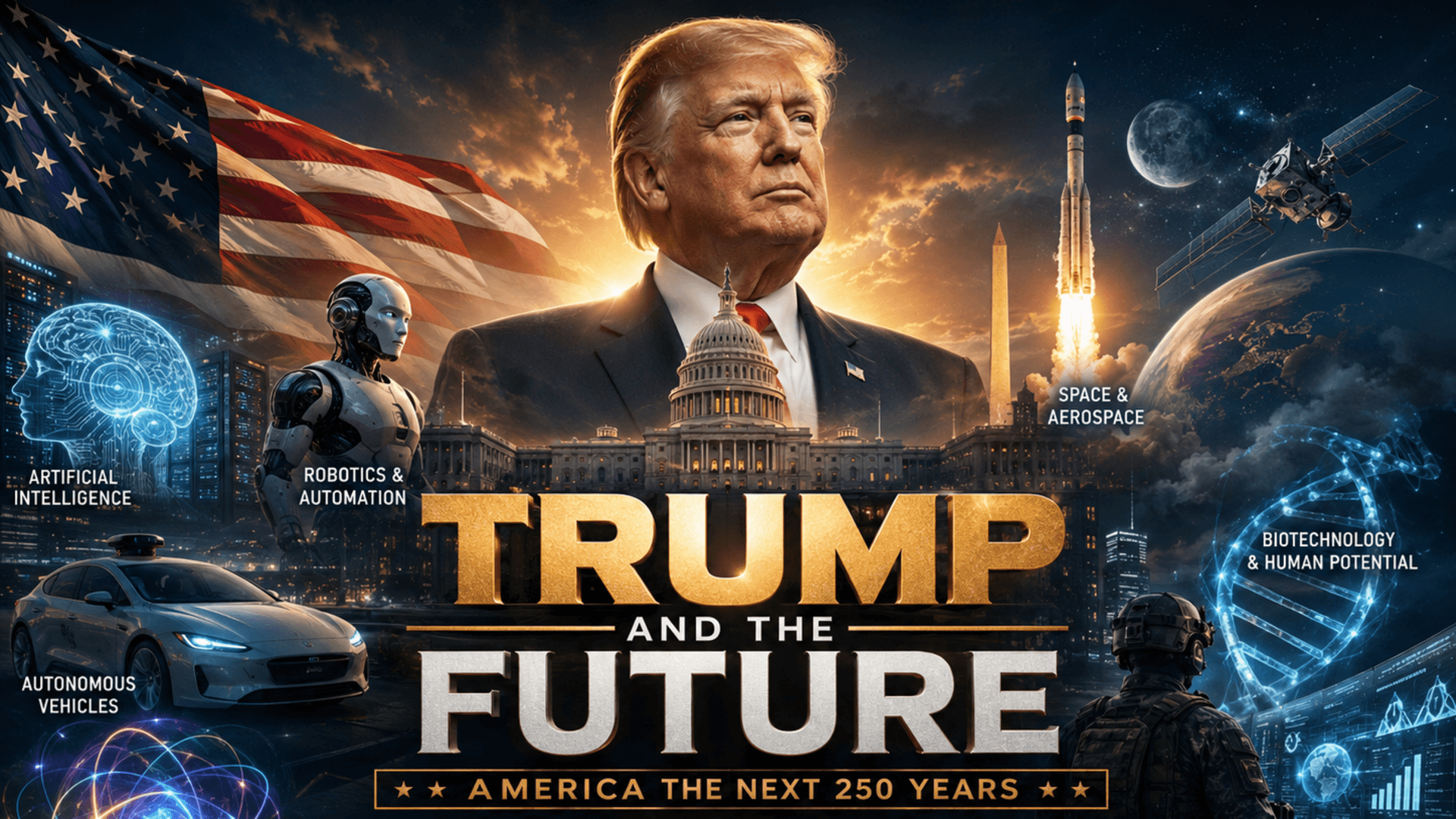
As the United States looks toward its next 250 years, the intersection of national governance and breakthrough technologies has become the defining arena for global economic dominance and cultural evolution.
When analyzing how policy shapes innovation, the narrative isn't just about single-topic legislative acts. Under the current administration, the roadmap for frontier technology relies heavily on strategic executive directives, federal agency acceleration, and targeted frameworks designed to slash red tape, prioritize national security, and outpace international competition.
Here is how key frontier technologies are being managed at the federal level—and why these trajectories matter for America's long-term future.
1. Artificial Intelligence (AI)
The Strategy: Driven by key executive actions—such as the order on Removing Barriers to American Leadership in Artificial Intelligence and executive frameworks focused on national policy—the emphasis is on clearing regulatory bottlenecks, building domestic data infrastructure, and preventing a fragmented 50-state compliance patchwork.
Why It Matters: AI is the underlying operating system for the next century of innovation. A streamlined national standard ensures that U.S. developers and enterprises can scale rapidly without getting bogged down by contradictory state-level red tape.
2. Autonomous Vehicles (AVs)
The Strategy: Advanced through Department of Transportation (DOT) and NHTSA modernization initiatives, paired with localized and state-level pilot expansions.
Why It Matters: Autonomous logistics and transit represent a multitrillion-dollar revolution in supply chains and urban labor. Establishing robust, unified testing frameworks safely accelerates commercial deployment, radically reducing transport friction.
3. Space & Aerospace
The Strategy: Fueled by commercial spaceflight authorizations, streamlined FAA launch procedures, and deep-dive defense-space integrations.
Why It Matters: Space is the ultimate high ground for global communications, logistics, and resource security. Maintaining commercial momentum ensures that American aerospace pioneers anchor the next generation of the orbital economy.
4. Robotics & Advanced Automation
The Strategy: Backed by federal R&D funding (via agencies like NSF and DARPA), strict hardware vetting, and strategic procurement frameworks to secure critical domestic infrastructure.
Why It Matters: As global supply chains shift toward localized, automated manufacturing, domestic robotics capacity acts as a vital backbone for economic resilience and national security.
5. Quantum Physics & Computing
The Strategy: Supported by sustained funding extensions through the National Quantum Initiative and targeted national security integrations.
Why It Matters: Quantum computing will rewrite the rules of cybersecurity and materials science. Winning this race means solving complex molecular and defense equations instantaneously.
On the Horizon: Cloning, Transhumanism, and the Next 250 Years
Beyond the immediate technology stack lies a profound frontier—gene editing, cyber-human interfaces, and the broader concepts of transhumanism. While current bioethical frameworks strictly regulate human reproductive cloning while funding therapeutic advancements, the next 250 years will force lawmakers and society to confront the blurring lines between biology and machine.
As a futurist observing the collision of culture, ethics, and data, the core question remains: How do we balance rapid technological freedom with human-centric values? The policy decisions made today will dictate whether America successfully pioneers the next stage of human evolution or leaves the future to chance.
What technologies do you think will define the next century of American leadership? Let’s discuss in the comments below.
Related articles



Thanks for reading.
More articles