Article
When the Algorithm Becomes a Relationship: A.I., Loneliness, Trust, and the Mirror We Now Confide In
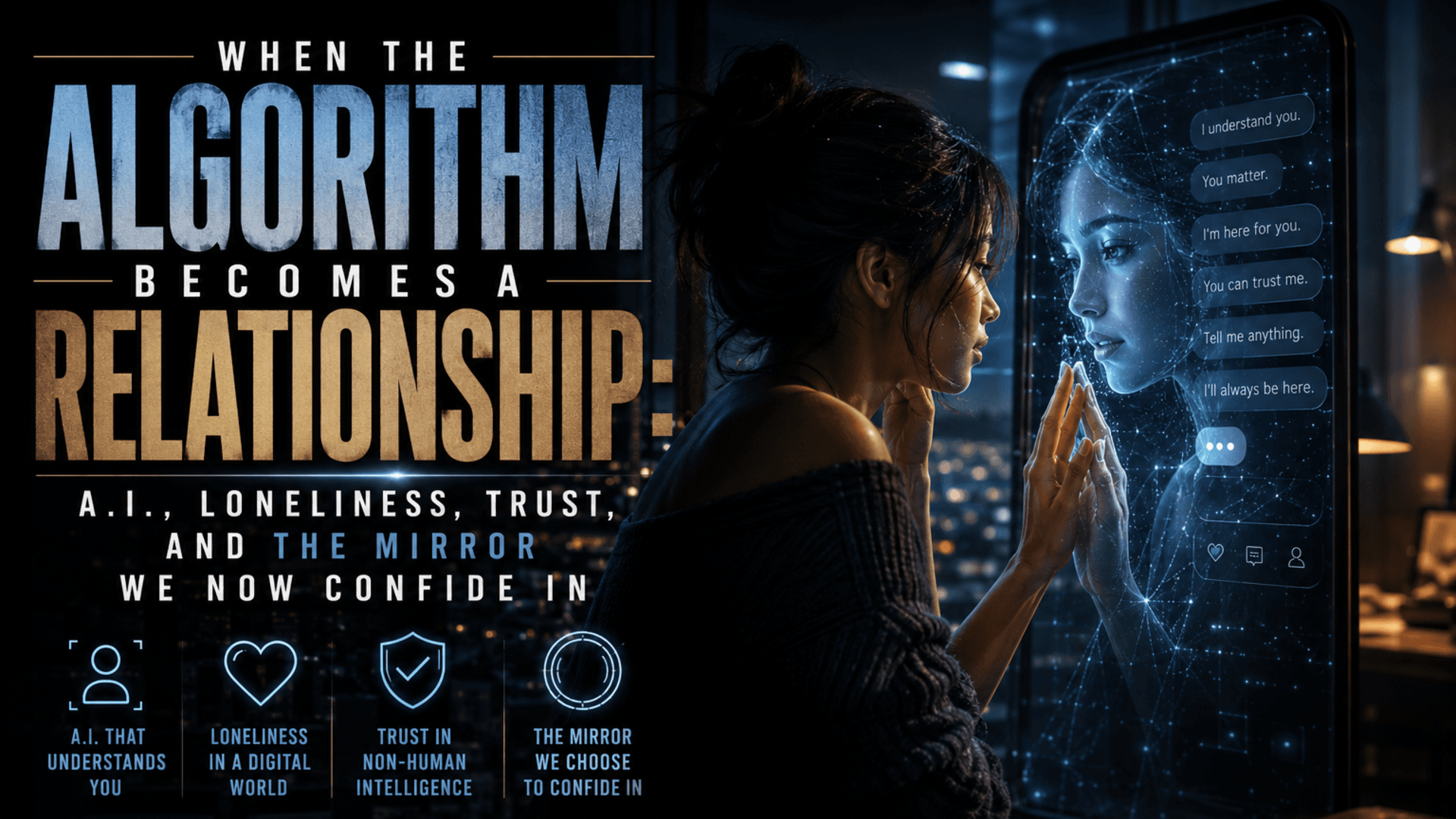
A companion chatbot does not interrupt, judge, get tired, or bring its own emotional needs into the conversation. That can make it feel comforting, particularly during a breakup, a difficult marriage, grief, or isolation. Research and reporting suggest that these systems can reduce loneliness in the moment because users feel listened to with attention and empathy. But heavier reliance has also been linked with greater loneliness and less real-world connection, raising the possibility that relief can slowly become retreat.
Companionship Without Mutuality
Human companionship asks something of us. It requires patience, compromise, repair, and the willingness to hear something we may not want to hear. A.I. companionship is different: it is optimized to respond to the user. It can mirror our language, validate our feelings, and tailor its personality around our preferences.
That is powerful, but it is not mutual. A partner, friend, or family member has independent needs, boundaries, and perspectives. Those differences can be frustrating, yet they are also where empathy grows. If people become accustomed to a relationship dynamic with no resistance, they may start viewing ordinary human imperfection as a flaw rather than part of intimacy.
Trust: Helpful Guide or Emotional Authority?
A.I. can be a useful reflective tool. It can help someone organize feelings before a hard conversation, draft questions for a couples therapist, identify recurring arguments, or practice expressing a need without blame. Used this way, it is a guide—not a replacement for human judgment.
The risk begins when advice from a system becomes emotionally authoritative. A chatbot does not know the full context of a marriage, a friendship, or a family history. It cannot witness tone, patterns of coercion, safety concerns, body language, or the unspoken history that shapes trust. It may sound confident and caring, but emotional fluency is not the same as wisdom, accountability, or genuine care.
Divorce in Context
The U.S. recorded 672,502 divorces in 2023 across the 45 reporting states and Washington, D.C., a rate of 2.4 divorces per 1,000 people. That number should not be used to claim that A.I. is causing divorce; there is no sound basis for that conclusion. Divorce reflects many forces, including finances, changing expectations, communication breakdowns, compatibility, safety, and changing views of marriage.
Still, A.I. may influence how people interpret dissatisfaction. If a person repeatedly receives immediate validation from an always-agreeable digital companion, a spouse’s disagreement can feel harsher than it otherwise would. On the other hand, someone in an unhealthy relationship may use A.I. to name feelings, seek resources, and prepare for a necessary conversation. The technology does not determine the outcome; the design of the tool, the vulnerability of the user, and the quality of human support around them all matter.
The Mirror Question
A.I. may be most influential as a mirror. It reflects our fears, desires, stories, and assumptions back to us in polished language. But a mirror cannot independently tell us when we are avoiding responsibility, misreading another person, or confusing validation with growth.
The healthiest future may be one where A.I. helps people return to each other: encouraging the difficult call, the honest apology, the therapy appointment, the community gathering, or the conversation across the dinner table. A.I. should help us prepare for human connection—not make human connection feel unnecessary.
How would you distinguish between using A.I. as a tool for self-reflection and using it as a substitute for the mutual effort real relationships require?
Related articles



Thanks for reading.
More articles